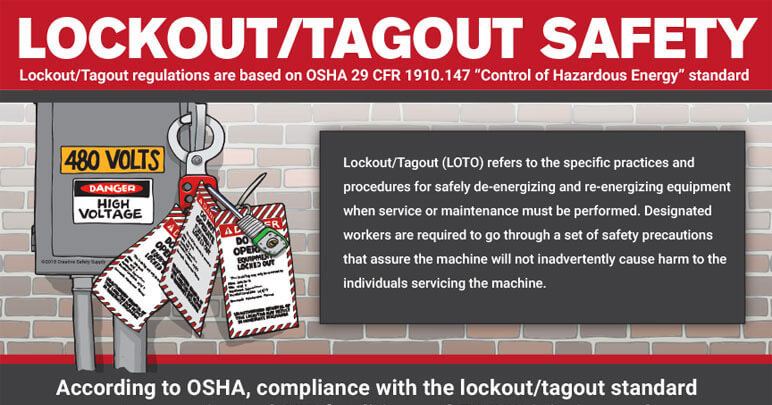
Machines don’t warn you before they start. A conveyor belt reactivates during maintenance. A press cycles unexpectedly. These aren’t hypotheticals—they’re preventable tragedies rooted in improper energy control. Every year, dozens of workers are injured or killed because equipment wasn’t properly isolated. The OSHA lockout tagout (LOTO) standard—29 CFR 1910.147—exists to stop these incidents. At the heart of any effective LOTO program is a well-structured procedure template. Without it, even trained teams can miss steps, miscommunicate, or rely on memory—inviting disaster.
This guide delivers a real-world–ready OSHA lockout tagout procedure template, optimized for clarity, compliance, and consistency. Whether you’re in manufacturing, facilities maintenance, or industrial operations, this resource arms you with the framework to lock down hazards and protect personnel.
Why a Standardized LOTO Procedure Template Matters
A one-size-fits-all approach doesn’t exist in lockout tagout—but a standardized template does. Customization is essential per machine type and energy source, but the underlying structure must remain consistent. Templates eliminate improvisation, reduce human error, and serve as legal proof of due diligence during OSHA audits.
Consider a maintenance team servicing a hydraulic press. One technician assumes a valve shut-off is sufficient. Another knows electrical isolation is also required. Without a documented, step-by-step procedure, assumptions win—and so do risks. A solid template forces precision, ensures all energy sources are addressed, and creates a paper trail of compliance.
Templates also streamline training. New hires don’t need to memorize procedures—they follow clear, visual, auditable instructions. This consistency reduces onboarding time and increases operational safety across shifts.
Core Elements of an OSHA-Compliant LOTO Procedure Template
Your template isn’t just a checklist—it’s a living document that guides workers from preparation to re-energization. Every OSHA-compliant LOTO procedure must include these non-negotiable elements:
1. Equipment Identification Clearly name the machine or system. Include model number, location, and a unique identifier (e.g., “Hydraulic Press – Line 3, Bay B”). This avoids confusion when multiple similar machines exist.
2. Energy Sources Identification List every type of energy involved: electrical, pneumatic, hydraulic, thermal, chemical, gravitational, and mechanical. For example: - 480V electrical feed - Hydraulic accumulator (1,500 psi) - Gravity (raised die set)
3. Shutdown Instructions Specify the sequence for safely stopping the machine. Include control panel actions, emergency stops, and auxiliary systems. Example: > 1. Press “Stop” on HMI. > 2. Confirm all motion has ceased. > 3. Engage emergency stop button.
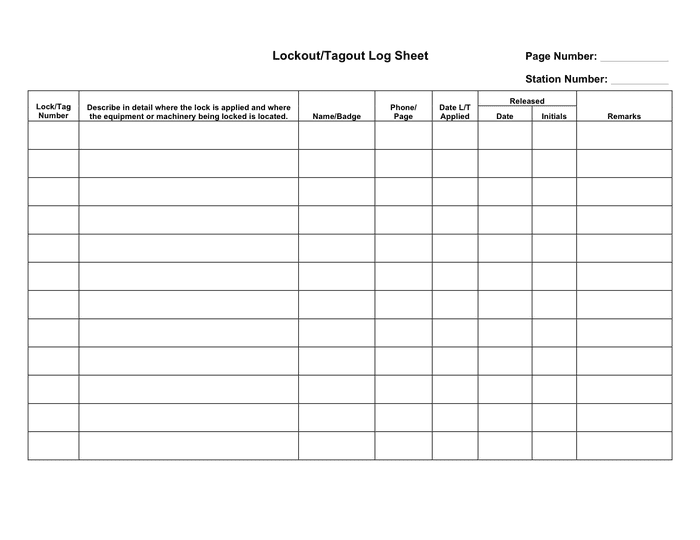
4. Isolation Steps Identify each energy-isolating device (circuit breaker, valve, block, etc.). Provide lockout point numbers or tags. Example: > - Lock open circuit breaker #HP-3B (Electrical Panel 7) > - Close and lock hydraulic isolation valve #HV-22
5. Lockout and Tagout Application Detail who applies locks and tags. Include:
- Personal lock per authorized employee
- Durable tag with name, date, time, reason
6. Stored Energy Release List methods for dissipating residual energy:
- Bleed hydraulic lines
- Block elevated components
- Ground capacitors
7. Verification of Zero Energy Mandate a test: attempt to restart the machine (using normal controls) while locked out. Confirm no motion or energy release. Document verification.
8. Restoration Steps Outline re-energization in reverse:
- Confirm all tools removed
- Notify affected employees
- Remove locks only by the person who applied them
Each procedure should be machine-specific, written in plain language, and illustrated when helpful (e.g., diagrams of lock points).
Common Mistakes That Undermine LOTO Templates
Even well-intentioned programs fail due to subtle but critical errors. Avoid these pitfalls:
Using a Generic Template Without Customization A boilerplate LOTO form used across all equipment is worse than useless—it’s dangerous. A CNC lathe requires different isolation steps than a boiler. Customize for each machine.
Omitting Stored Energy Workers forget springs, capacitors, or suspended loads. A flywheel on a paper cutter can store kinetic energy for minutes. If not blocked, it can restart motion after shutdown.
Skipping Verification Assuming a machine is de-energized without testing is a top cause of injury. Always attempt a restart during lockout.
Group Lockout Confusion In team maintenance, use a group lockbox. Each worker applies their lock, but isolation devices are secured with a master hasp. The last person to remove their lock verifies all are clear before re-energizing.
Poor Tag Quality Tags that fade, lack detail, or use vague language (“Under Repair”) create ambiguity. Tags must be standardized, durable, and include the worker’s name and purpose.
Sample LOTO Procedure Template (Editable Framework)
Below is a practical, OSHA-aligned template you can adapt for any machine:
Equipment: Belt Conveyor – Packaging Line 2 Model: BC-2200 Location: North Wing, Zone D
Energy Sources
- Electrical: 240V motor feed
- Mechanical: Conveyor belt tension
- Gravitational: Incline section (15°)
Shutdown Procedure
- Press “E-Stop” at control station DS-4.
- Confirm belt has stopped moving.
- Switch selector to “Off.”
Isolation Steps
- Open and lock circuit breaker #CB-24 (Panel 12).
- Engage mechanical brake lever (Location: Drive Shaft Access Panel).
Lockout/Tagout Application
- Apply personal lock and tag to CB-24.
- Tag details: “LOCKED OUT – Maintenance. Jane Doe, 04/05, 08:15 AM.”
Stored Energy Release
- Release belt tension using adjustment screw.
- Block incline section with safety chocks.
Verification
- Attempt to restart via control panel.
- Confirm no movement or electrical response.
Restoration
- Remove tools and blockages.
- Notify operations supervisor.
- Remove lock only after all personnel are clear.
- Re-energize circuit breaker and reset E-Stop.
Tools to Support LOTO Template Implementation
While templates are foundational, digital tools enhance execution, tracking, and training. Consider these five platforms to scale your LOTO program:
| Tool | Key Features | Best For |
|---|---|---|
| EHS Insight | Digital LOTO procedures, mobile access, audit trails | Mid to large manufacturers |
| Lockout PRO | Interactive LOTO forms, QR code tagging, training modules | Facilities with diverse equipment |
| ProcessMAP | Compliance tracking, incident linkage, reporting | Regulated industries (pharma, energy) |
| iAuditor by SafetyCulture | Customizable LOTO checklists, real-time reporting | Field teams and remote sites |
| SpheraCloud EHS | Integrated risk management, LOTO workflows, analytics | Enterprise safety programs |
These tools reduce paperwork, improve compliance visibility, and integrate with broader EHS systems. However, no software replaces proper training and a culture of accountability.
Integrating the Template into Daily Operations
A perfect template gathers dust if not embedded in workflow. To ensure adoption:
- Conduct routine drills. Simulate LOTO scenarios quarterly. Time responses, check completeness.
- Assign procedure ownership. Each machine’s LOTO document should have a responsible supervisor who reviews it annually or after modifications.
- Use visual cues. Post simplified LOTO flowcharts near equipment. Highlight lock points with labels or floor markings.
- Train beyond authorization. Affected employees (those who operate or work near machines) must understand LOTO’s purpose—even if they don’t perform it.
- Audit regularly. Perform at least one annual inspection of each LOTO procedure. Document findings and corrective actions.
Example: A food processing plant reduced LOTO violations by 70% after introducing color-coded tags and monthly walkthroughs with maintenance leads.
Finalizing and Maintaining Your LOTO Program
Your OSHA lockout tagout procedure template isn’t a one-time document. It’s a living component of a broader energy control program. OSHA requires: - Written procedures for each machine - Authorized employee training (initial and annual refreshers) - Periodic inspections (at least annually) - Program updates when equipment changes
Store templates in an accessible format—digital repositories with role-based access work best. Print copies should be available in maintenance control rooms.
Remember: compliance isn’t about passing an audit. It’s about ensuring that every technician walks away from a maintenance task unharmed. A strong LOTO template doesn’t just check a regulatory box—it builds a culture where safety is procedural, predictable, and personal.
Start by auditing three critical machines. Draft or refine their procedures using this template. Train your team. Verify execution. Scale from there. The goal isn’t perfection on day one—it’s progress, consistency, and protection.
Frequently Asked Questions
What is the OSHA standard for lockout tagout? OSHA 29 CFR 1910.147 outlines the control of hazardous energy. It requires employers to implement procedures, training, and periodic inspections to protect workers during servicing.
Who can perform lockout tagout? Only authorized employees—those trained and certified in energy control procedures—may perform LOTO. Affected employees must understand the process but do not apply locks.
Can tags be used without locks? Only in cases where energy isolation cannot be achieved with a lock (e.g., padlock incompatible). Tagout alone is less secure and requires additional safety measures.
How often must LOTO procedures be reviewed? Each procedure must be inspected at least annually. The review must be conducted by an authorized employee not involved in the procedure and document findings.
What’s the difference between lockout and tagout? Lockout physically prevents energy restoration (e.g., padlock on a breaker). Tagout uses a warning tag. Lockout is preferred; tagout requires extra verification.
Do all machines need a LOTO procedure? Machines with multiple energy sources or complex shutdown processes require written procedures. Simple devices with a single disconnect may be exempt if criteria under 1910.147(a)(2)(ii) are met.
Can LOTO procedures be digital? Yes, OSHA accepts electronic procedures if they are accessible, secure, and prevent unauthorized changes. Mobile access during maintenance is encouraged.
FAQ
What should you look for in OSHA Lockout Tagout Procedure Template for Workplace Safety? Focus on relevance, practical value, and how well the solution matches real user intent.
Is OSHA Lockout Tagout Procedure Template for Workplace Safety suitable for beginners? That depends on the workflow, but a clear step-by-step approach usually makes it easier to start.
How do you compare options around OSHA Lockout Tagout Procedure Template for Workplace Safety? Compare features, trust signals, limitations, pricing, and ease of implementation.
What mistakes should you avoid? Avoid generic choices, weak validation, and decisions based only on marketing claims.
What is the next best step? Shortlist the most relevant options, validate them quickly, and refine from real-world results.